> For the complete documentation index, see [llms.txt](https://docs.auterion.com/llms.txt). Markdown versions of documentation pages are available by appending `.md` to page URLs; this page is available as [Markdown](https://docs.auterion.com/hardware-integration/skynode/peripherals/lidar.md).
# LIDAR
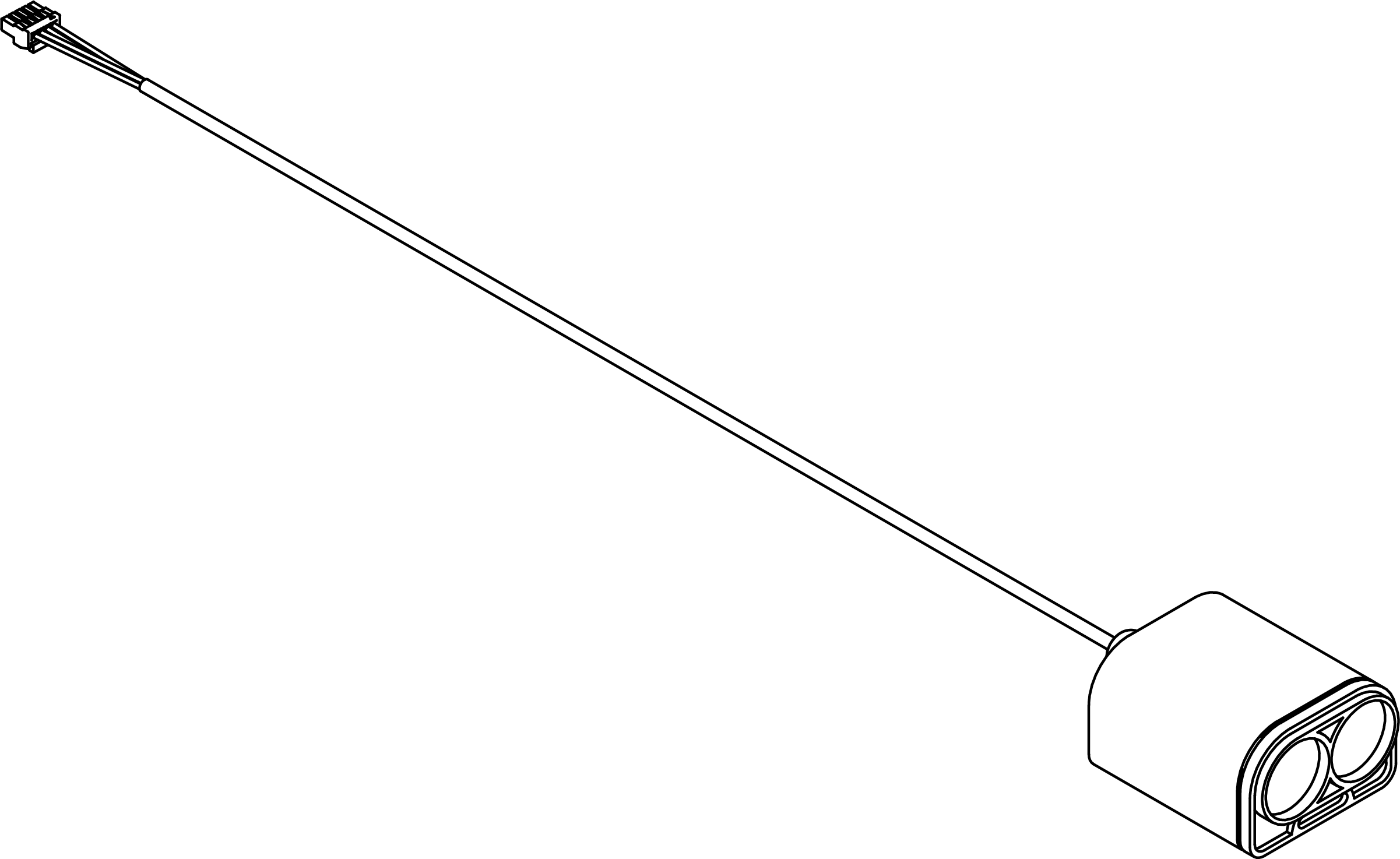
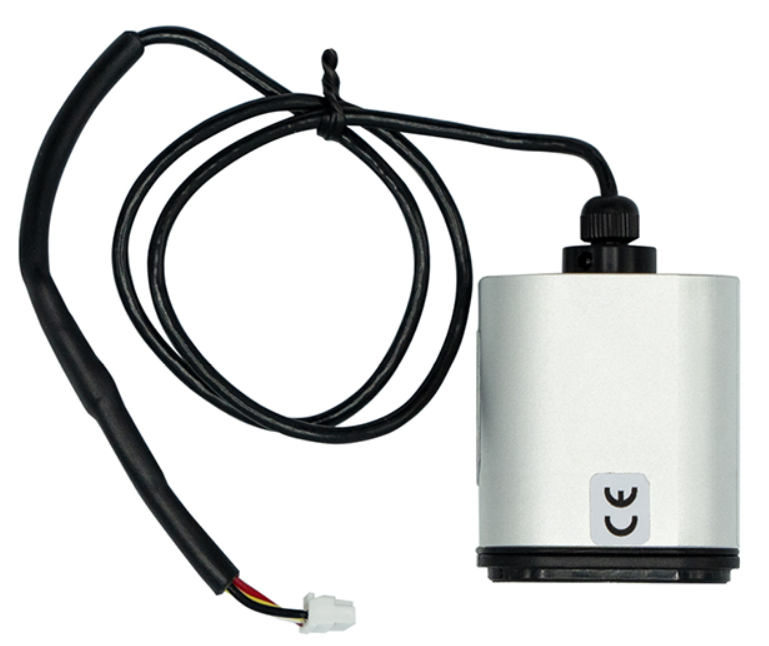
This page describes how to set up and configure the LW20/C Lidar sensor
{% hint style="danger" %}
This part is not sold by Auterion.
{% endhint %}
Lidar sensors are used to measure the distance from the ground and they are normally integrated in the landing process to make it more robust and delicate.
The sensor can be connected to Skynode via the Pixhawk adapter board.
1. Connect Skynode to the Pixhawk adapter board using the Primary/Secondary 40 pin molex cables. If you need to use both side of the board you have to connect both 40 pin connectors (Primary AND Secondary) to Skynode.
2. Connect the Lidar sensor to the Pixhawk adapter board using the dedicated connectors\
(I2C 2/J28 or I2C 1/J18)
## Configuration
{% hint style="info" %}
For APX4 releases 3.2 and older this step is not required as the sensor is started by default.
{% endhint %}
* [Power Skynode](/hardware-integration/skynode/evaluation-kit/powering-skynode.md)
* [Connect to it via USB-C or Wi-Fi](/hardware-integration/skynode/evaluation-kit/connect-to-amc.md)
* Open Auterion Mission Control and enable the [Advanced Mode](/hardware-integration/flight-controller-customization/amcs-advanced-mode.md)
* Navigate to the "Parameters" tab and change the parameter `SENS_EN_SF1XX` to SF/LW20/c
## Sensor functionality test
1. Access the AMC "Advanced Mode" by clicking five times on the AMC icon on the top left side of the screen.\
At this point the following Pop-up window should appear on your screen.\
Choose "Switch to Advanced".\
Once the change has taken place, the icon should change appearance from the normal orange color, to a transparent one.
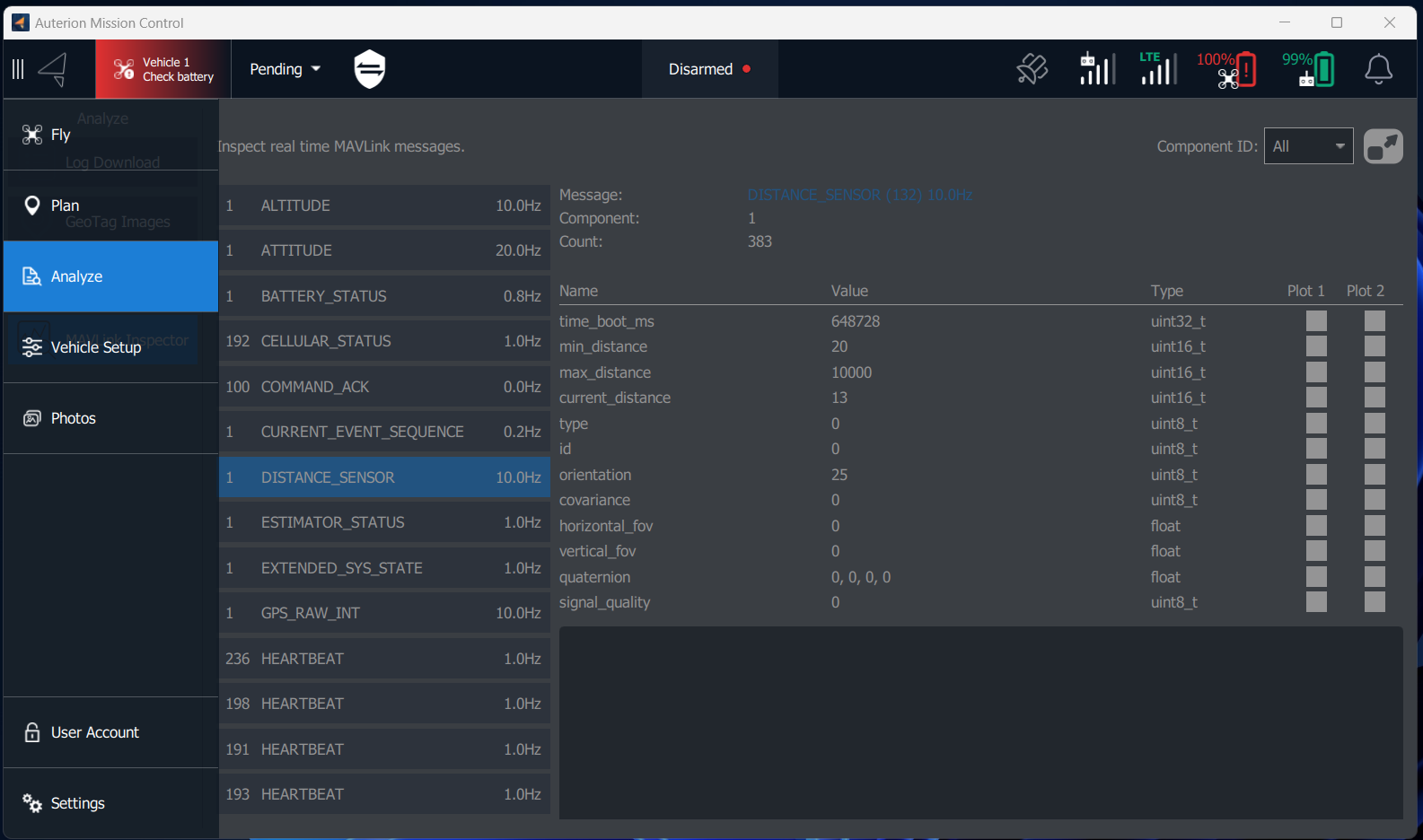
2. Click once on the icon to open the Menu bar and click on "Analyze"
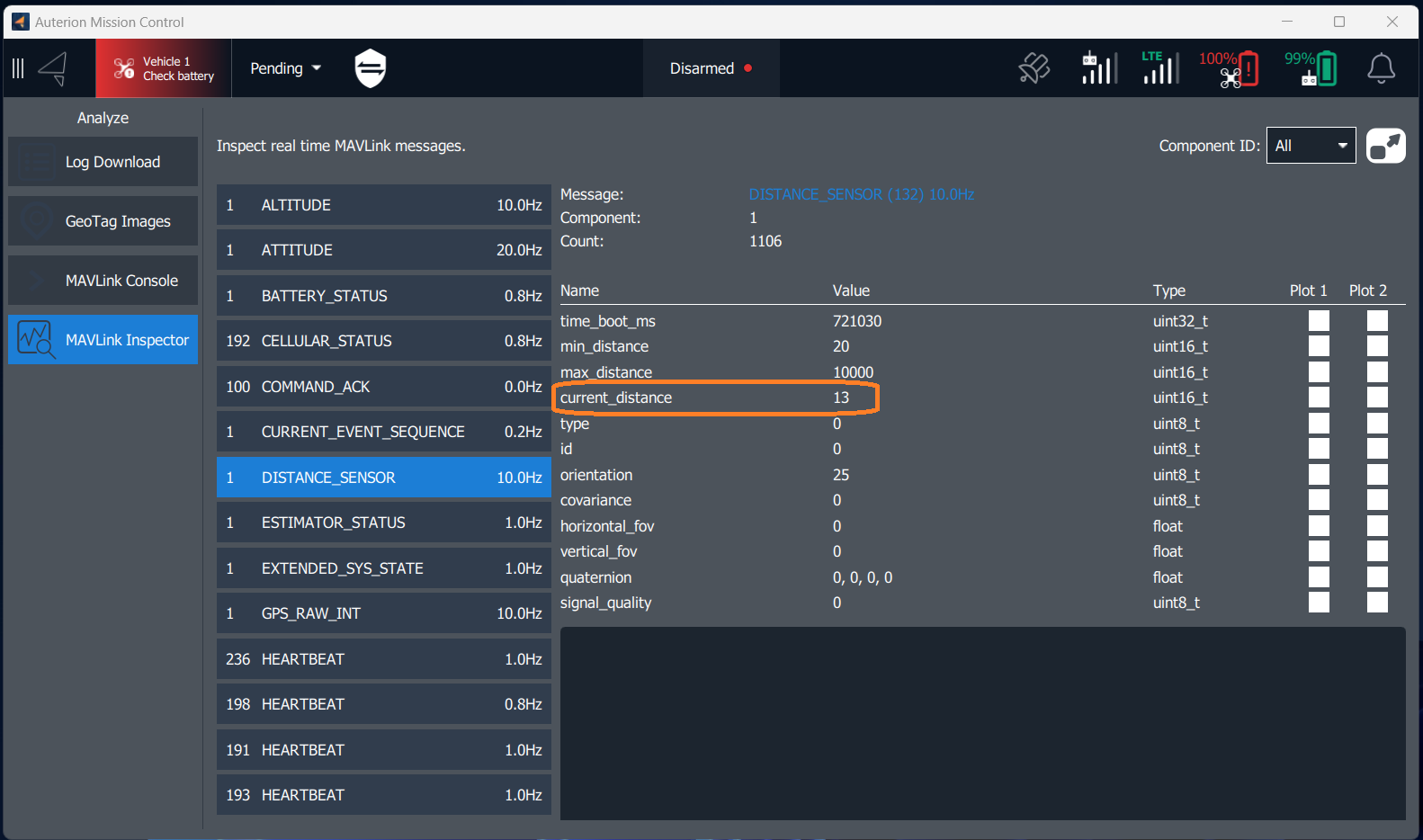
3. Choose "MAVLink Inspector" from the Menu bar on the left side and look for the "DISTANCE\_SENSOR" Parameter inside the MAVLink messages and click on it.\
Now you will be able to see the `current_distance` value, which represents the distance measured by the sensor in cm.