> For the complete documentation index, see [llms.txt](https://docs.auterion.com/llms.txt). Markdown versions of documentation pages are available by appending `.md` to page URLs; this page is available as [Markdown](https://docs.auterion.com/hardware-integration/skynode/payloads/phase-one-ixm-100.md).
# Phase One iXM-100
{% hint style="info" %}
This section describes how to set up the Phase One iXM-100 with Skynode. Please refer to[ this page](/hardware-integration/hardware-integration/initial-vehicle-wiring.md#pixhawk-payload-bus) for generic Skynode wiring information and [this page](/hardware-integration/skynode/peripherals/pixhawk-payload-bus.md) for specifics about the Pixhawk Payload Bus.
{% endhint %}
{% hint style="info" %}
The driver for this payload is in a Beta stage starting from AuterionOS v3.2.9, so you can still expect improvements and bug fixes in the next releases.
{% endhint %}
## What you will need for this step
* Skynode Enterprise (powered as described in [Power Skynode](/hardware-integration/skynode/evaluation-kit/powering-skynode.md))
* Pixhawk Payload Bus (connected as described in [Pixhawk Payload Bus](/hardware-integration/skynode/peripherals/pixhawk-payload-bus.md))
* USB-C to Micro USB cable (not included in the kit)
* Phase One iXM-100 (not included in the kit)

## Preparation
When using the Phase One ixm100 with the P3 Gimbal please consult the [Official Instructions](https://www.phaseone.com/downloads/phase-one-p3-typeii-gimbal/) from Phase One for mounting the camera and balancing the gimbal.
{% hint style="info" %}
For Skynode, the HDMI connection to the Gimbal isn't needed.
{% endhint %}
## Setup
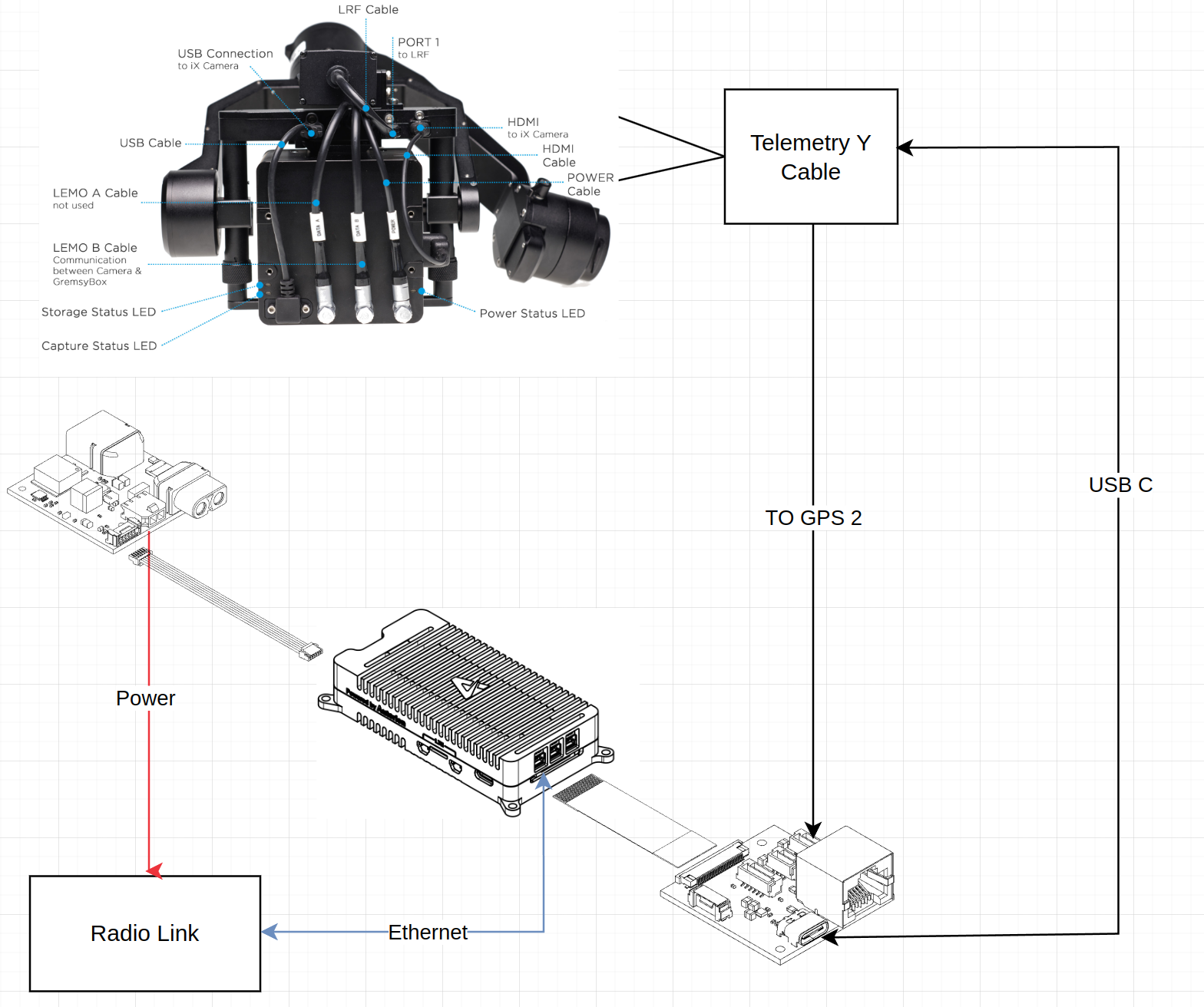
Connect the camera to the [Pixhawk Payload Bus](/hardware-integration/skynode/peripherals/pixhawk-payload-bus.md) Adapter Board using a USB-C to USB-C cable or connect it directly to the Skynode USB Port using the official SKND USB ADAPTER as shown in the wiring diagram below:
The payload driver running in AuterionOS inside your Skynode will automatically detect the camera and show the video stream and camera controls in the Fly view in Auterion Mission Control.
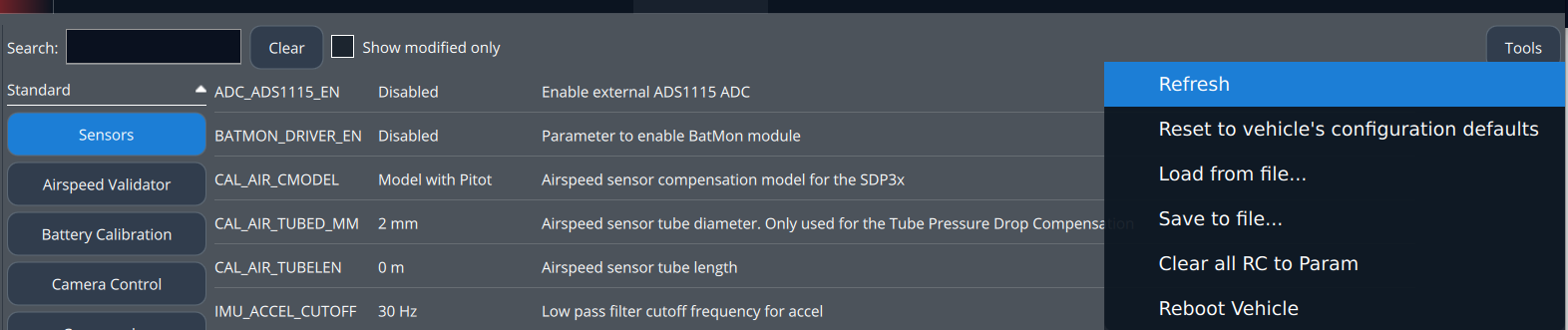
The P3 gimbal instead is not automatically detected by the driver running in APX4 inside your skynode. To do this you will need to configure the following APX4 parameters on Skynode:
1. MAV\_2\_CONFIG => TELEM 3
2. MAV\_2\_MODE => Gimbal
3. MAV\_2\_FORWARD => Enabled
4. MAV\_S\_FORWARD => Enabled
5. MNT\_MODE\_IN => Mavlink gimbal protocol V2
6. Reboot and refresh parameters
7. SER\_TEL3\_BAUD => 115200 8N1
8. MNT\_MODE\_OUT => Mavlink gimbal protocol V2
9. You can set these parameters manually from AMC for testing purposes, although it's recommended to include them in your [custom APX4 airframe](/hardware-integration/hardware-integration/airframe-setup-in-software.md) file once you are done testing it.
Follow the instructions in [General Setup](/hardware-integration/skynode/payloads.md#general-setup-same-for-all-payloads). This section is the same for all payloads.